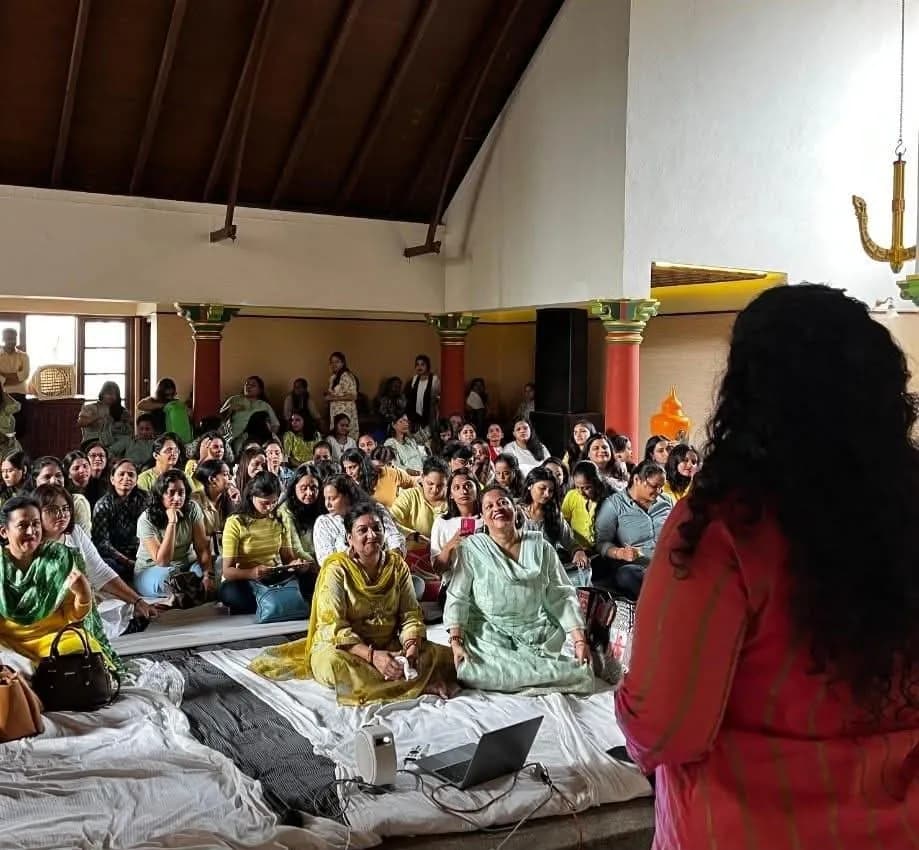
How to get into the right state of mind before a presentation, a hard conversation or an exam: relaxed alertness, not tension, plus a five-minute routine.
You have prepared for weeks. The slides are ready, the notes are revised, the outfit is ironed. Then, five minutes before the presentation, your heart starts racing, your mind goes blank and the words you knew so well seem to vanish.
Being in the right state of mind is often what separates a moment we handle well from one we fumble, even when the preparation is identical. The good news is that mental readiness is not luck or personality. It is something you can practise, just like the content itself.
In this post we look at what the right state of mind really means, why tension works against us, and a simple pre-moment routine you can use before a presentation, a difficult conversation or an exam.
What is the right state of mind?
Many people imagine the ideal state as total calm, feeling nothing at all. But think of a batter facing a fast bowler, or a surgeon beginning an operation. They are not sleepy. They are awake, focused and ready to respond, yet not frozen or frantic.
The Japanese martial tradition has a word for this: Zanshin, often translated as "remaining mind". It describes relaxed alertness, a state in which the body is at ease and attention is fully switched on. It is neither tense nor slack. In Zanshin you are not bracing for disaster; you are simply present and responsive. We explore this further in the art of Zanshin and staying present.
Why tension is not the same as readiness
When something matters, many of us tighten up as a way of taking it seriously. Shoulders rise, breath gets shallow, jaws clench. It feels like effort, but it usually reduces our ability to think clearly and speak freely.
Signs you are tense rather than ready
- Your breathing is quick and high in the chest.
- You are rehearsing the worst outcome on repeat.
- You cannot stop checking your notes or your phone.
- You feel cut off from the people around you.
Signs you are in a ready state
- Your breath is slower and lower, towards the belly.
- Your attention is on the task in front of you, not the imagined result.
- You can notice nerves without being taken over by them.
- You feel connected to your audience or the person in front of you.
Some nervous energy is normal and can even be helpful. The aim is not to remove it but to channel it.
Try this: a five-minute routine for the right state of mind
This routine takes about five minutes and can be done in a corridor, a washroom, a parked car or a quiet corner outside the exam hall. Practise it a few times on ordinary days so that it feels familiar when it counts.
Step 1: Arrive in your body (1 minute)
Plant both feet on the floor and feel the weight of your body. Let your shoulders drop and unclench your jaw. Notice three things you can see and two things you can hear. This brings you out of the story in your head and into the room.
Step 2: Lengthen the out-breath (2 minutes)
Breathe in gently through the nose for a count of four, and out for a count of six. A longer exhale is a widely used way to help the body settle. Keep it comfortable, never forced.
Step 3: Set one intention (1 minute)
Instead of "I must not mess this up", choose one clear, positive focus. For a presentation: "I am here to help them understand." For a hard conversation: "I want to listen first." For an exam: "One question at a time."
Step 4: Begin, and keep a remaining mind (1 minute and onwards)
As you start, keep a small part of your attention on your breath and posture. If you stumble, notice it, breathe and continue. That steady thread of awareness is Zanshin in practice.
Using the routine in different moments
Before a presentation
Arrive early, stand where you will speak and do the routine there. Look at the empty chairs and picture them filled with people who want you to do well, because most of them do. For more on presence in professional settings, see the remaining mind: presence in meetings.
Before a hard conversation
Whether it is feedback for a team member or a sensitive topic with a parent, the routine helps you respond instead of react. Your intention becomes your anchor if the conversation heats up.
Before an exam
Students preparing for board or entrance exams can use the breathing step outside the hall and again after reading through the paper. Parents can help most by staying calm themselves rather than adding last-minute advice. If you or someone you know is struggling, India's Tele MANAS helpline is free and available 24/7 on 14416.
Frequently asked questions
How do I calm my nerves before a presentation?
Arrive early, ground yourself through your feet and slow your breathing with a longer out-breath for two minutes. Then set one simple intention, such as helping the audience understand. Rehearsing your opening few lines also helps, because the hardest part is usually starting.
Is it bad to feel nervous before something important?
No. Nerves usually mean you care, and a certain amount of activation can sharpen focus. The problem arises when nervousness turns into tension or panic. Practices like slow breathing and grounding help you use that energy rather than be overwhelmed by it. If anxiety regularly disrupts your life, consider speaking with a mental health professional.
How can I stay calm under pressure?
Calm under pressure is built in advance. Practise a short grounding routine on ordinary days so your body learns it. In the moment, return to your breath, focus on the next small step and let go of the imagined outcome. Over time, relaxed alertness becomes your default rather than an effort.
The right state of mind is a skill you can train. In our Mindfulness Fundamentals workshop we practise routines like this together, and everyone leaves with a personal practice plan built for their own big moments. If you would like a session for your team or institution, contact us.