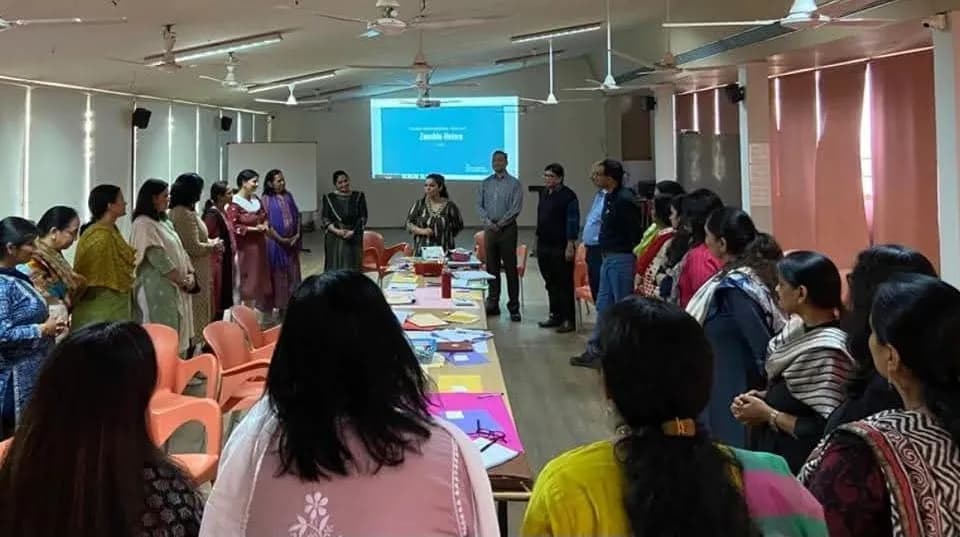
World Mental Health Day 2026 asks us to hear lived experience. How to listen without fixing at home, at work and in schools, so real voices bring change.
World Mental Health Day 2026, observed on 10 October, carried a theme from the World Federation for Mental Health that deserves more than a day of social media posts: "Lived Experiences Heard: Real Voices, Real Change". It is a simple idea with deep consequences. The people who know most about living with mental health challenges are the people living with them.
Yet in many homes, offices and classrooms, those voices are interrupted, corrected, advised or quietly ignored. Not out of cruelty, usually, but out of discomfort. We want to help, so we jump in. We want things to be fine, so we hurry the conversation along.
In this post we look at what it means to truly hear lived experience, why listening without fixing is so powerful, and how organisations can create space for real voices all year round.
What lived experience really means
Lived experience is first-hand knowledge: what it is actually like to go through anxiety, depression, burnout, grief or any mental health condition, or to care for someone who does. It is different from reading about a condition or holding a professional opinion on it. Both matter, but lived experience brings something no textbook can: the texture of daily life.
A colleague who manages panic attacks knows which meeting formats make them worse. A student who has struggled with low mood knows which words from teachers helped and which made them shut down. A woman caring for an unwell parent knows exactly what support would make the week manageable. When we hear these voices, our policies and our relationships become wiser.
World Mental Health Day 2026 and listening without fixing
Most of us are trained to respond to a problem with a solution. When a friend says they have not been sleeping, we suggest switching off the phone. When a team member says they feel overwhelmed, we offer a productivity tip. It is well meant, but it is often received as "you did not really hear me".
Listening without fixing means staying with the person's experience before rushing to change it. It is close to what Zanshin, the "remaining mind", asks of us: relaxed, steady attention that does not leave the moment as soon as it becomes uncomfortable.
What fixing sounds like
- "You just need to think positive."
- "Have you tried going for a walk?"
- "Everyone feels like that sometimes."
- "At least you have a good job."
What hearing sounds like
- "That sounds really hard. Tell me more."
- "How long have you been feeling this way?"
- "Would it help more if I just listened, or would you like some ideas?"
- "Thank you for telling me."
The third question is especially useful. Sometimes people do want suggestions. Asking lets them choose, and that choice is itself a form of respect.
Hearing real voices at home
Families are often where mental health conversations are hardest. There may be worries about what relatives will say, or a habit of brushing feelings aside with "everything will be fine". A teenager hinting that they are not okay in the family WhatsApp group may get a heart emoji and nothing more.
Small shifts help. Make time for one-to-one conversations without screens. Ask open questions and resist correcting the person's feelings. If someone shares something serious, thank them, and gently ask whether they would like help finding support. For more on why conversations go wrong, see why communication breaks down.
Real voices at work and in schools
Organisations can make listening part of their structure rather than leaving it to chance. This connects closely to psychological safety as infrastructure: people speak up only when they believe it is safe to do so.
Practical steps for workplaces
- Invite employees with lived experience to help shape wellbeing policies, on a voluntary basis, rather than designing them only from the top.
- Train managers to listen first and refer to support second, instead of diagnosing or dismissing.
- Make it normal to say "I am having a difficult week" without fear of being seen as less capable.
- Review what happens after someone speaks up. Hearing is only meaningful if something changes.
Practical steps for schools
- Create regular, low-pressure check-ins between students and a trusted teacher.
- Ask students what actually helps during exam season instead of assuming.
- Teach listening as a life skill, not just an extra-curricular activity.
If you or someone you know is struggling, India's Tele MANAS helpline is free and available 24/7 on 14416.
Try this: the three-minute listening practice
Practise this with a friend, partner or colleague who agrees to try it with you.
- Minute one: they talk about something on their mind. You only listen. No advice, no "same thing happened to me" stories.
- Minute two: reflect back what you heard in your own words, for example, "It sounds like you are tired of carrying this alone." Then ask, "Did I get that right?"
- Minute three: ask one open question, such as "What would help most right now?" Then listen again.
Swap roles afterwards and talk about what it felt like to be heard. Many people are surprised by how rare, and how relieving, it is.
Frequently asked questions
What is the theme of World Mental Health Day 2026?
The World Federation for Mental Health set the theme "Lived Experiences Heard: Real Voices, Real Change" for World Mental Health Day on 10 October 2026. It highlights the importance of listening to people with first-hand experience of mental health challenges and letting their voices shape real change.
How can I support someone with a mental health problem?
Start by listening without judging or rushing to fix. Ask what would help, respect their answer and stay in touch. Encourage professional support where needed; in India you can share the free Tele MANAS helpline on 14416. Looking after your own wellbeing matters too.
How can workplaces observe World Mental Health Day meaningfully?
Go beyond a one-day event. Involve employees with lived experience in shaping policies, train managers in listening skills, and track what changes after people speak up. A single talk can start the conversation, but lasting change comes from habits built into everyday work.
Hearing real voices is a skill, and skills can be learnt. Our Communication Masterclass is not a lecture but a practice, with listening exercises that participants take home in a personal practice plan. To bring a session to your workplace or school, explore our custom workshops.